
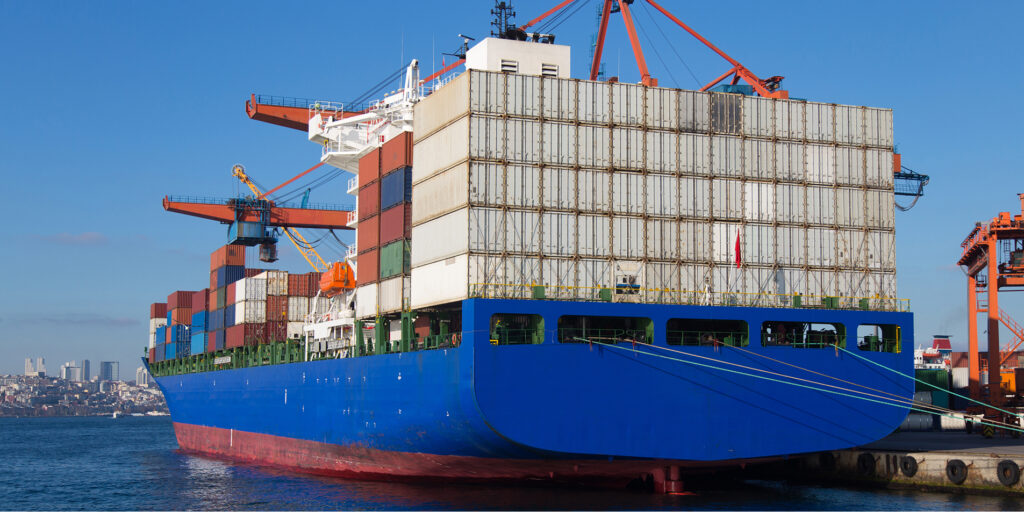
The logistics sector, the lifeblood of global trade and the local economy, brings risks along with its growing volume every day. The journey of a product from its production point to its final consumption point is a serious operational process for businesses. Whether you are dealing with intercity road transport or intercontinental maritime exports; from the moment your cargo sets off, it faces countless risks.
Accidents, theft, fire, natural disasters, or damage during loading… All these scenarios are in the nature of trade. However, you do not have to leave your capital and commercial reputation unprotected against these risks. This is where Cargo Insurance (Transport Insurance) comes into play.
In this comprehensive guide, we answer the questions most frequently asked by business owners and logistics managers: “How are cargo insurance prices calculated?”, “Which coverage type is suitable for my cargo?”, and “What is the difference between All Risk and Total Loss?” Our goal is to ensure you make the right decision before purchasing a policy and to help you optimize your costs.
What is Cargo Insurance (Transport Insurance)?
Cargo Insurance is a type of insurance that secures the financial damages a commercial good (commodity) might suffer due to risks specified in the policy during its transport from one place to another via a transport vehicle (truck, ship, plane, or train).
An Important Distinction:
It is necessary to clarify a frequently confused topic; Cargo Insurance is not “Hull Insurance” (Kasko) for the transport vehicle (the truck or the ship). It covers the damage to the load (goods) carried by the vehicle, not the damage to the vehicle itself. The owner of the goods, the buyer, or the party assuming the transport risk can take out this insurance.
Why is Cargo Insurance Necessary? Commercial Risk Management
A truck full of electronics, a container full of textile products, or sensitive machine parts… Your cargo in shipment is actually your “cash in transit.”
A single major accident during the logistics process can cause bankruptcy for an uninsured business or wipe out the entire profit margin for that year. Getting cargo insurance not only protects the goods but also ensures:
- Protecting Capital: It compensates for the financial loss in case the goods are lost or damaged.
- Protecting Commercial Reputation: It allows you to manage crises that would occur if you cannot fulfill your commitment to the buyer.
- Credit and Finance: Banks generally require cargo insurance for foreign trade transactions (payments via Letter of Credit).
Cargo Insurance Coverage Types: How Safe is Your Load?
The most important factor determining cargo insurance prices is the scope of the chosen coverage. In insurance, coverages are generally determined by international standards called “Institute Cargo Clauses.” You can choose one of three main coverage types according to your business needs:
1. Total Loss Coverage
This is the narrowest scope and the lowest cost option.
- Scope: It covers the situation where the goods are completely lost together with the transporting vehicle. In other words, partial damage, wetting, or theft of a part of the goods is not paid. For payment to be made, the entire cargo must be destroyed as a result of the ship sinking or the truck completely burning down.
- Suitable For: Generally preferred by those transporting scrap, bulk cargo, or very low-value goods.
2. Limited Cover (Truck Clause)
Generally used in road transport.
- Scope: It covers damages to the goods resulting from the vehicle burning, overturning, colliding, or going off the road. However, theft, wetting, or damages during loading/unloading are generally excluded (Theft can be added with an additional premium).
3. Wide Cover (All Risk / Institute Cargo Clause A)
This is the most comprehensive insurance type, most preferred by companies engaged in export and import.
- Scope: Although called “All Risk,” it covers all sudden and unexpected damages except those explicitly excluded in the policy (e.g., the inherent vice of the good, delay, war, etc.).
- Advantages: Breakage, wetting, theft, shortage, and damages during loading and unloading are covered.
- Recommendation: If you are transporting sensitive, valuable, or theft-prone goods, our experts definitely recommend evaluating the All Risk option. You can visit our [Cargo Insurance Product Page] for detailed information.
How Are Cargo Insurance Prices Determined? Calculation Criteria
We come to the most curious subject: “What changes cargo insurance prices?”
There is no fixed “off-the-shelf price” in cargo insurance. The risk profile of each shipment is different, and the premium calculation is made with “per mille” or “percentage” rates based on this profile. The 5 basic criteria directly affecting the price are:
1. Type and Nature of Goods
What is being transported is the most critical element determining the price.
- Low Risk: Iron-steel, raw materials.
- Medium Risk: Textiles, food, furniture.
- High Risk: Mobile phones, electronics, glass products, artworks.
As the risk of breakage, spoilage, or theft increases, the insurance premium also increases.
2. Packaging Method
How the goods are sent out changes the probability of damage.
- Container: Considered the safest transport method and is generally more affordable.
- Bulk Cargo: Risk is higher.
- Carton Box / Pallet: Evaluated by experts for sufficient protection. Inadequate packaging can cause problems in case of damage.
3. Transport Vehicle and Route
- Vehicle: Shipment by ship, truck, plane, or train changes the risk. Also, the age and class of the carrying ship can affect the price.
- Route: Where the goods go from and to is important. Premiums rise for shipments to war-risk zones, countries with political instability, or routes with poor physical road conditions, or additional “War and Strikes” premiums may be requested.
4. Insurance Value (Invoice Amount)
In cargo insurance, the premium is calculated based on the insurance value. The insurance value generally consists of the sum of: Invoice Value of Goods + Freight (Transport Cost) + Insurance Premium. In export transactions, a 10% “imaginary profit” (expected profit) share is often added to this.
As the insurance value increases, the premium amount to be paid mathematically increases (even if the rate remains constant).
5. Breadth of Coverage
As mentioned above, there will be a serious price difference between a “Total Loss” policy and a “Wide Cover (All Risk)” policy. However, the price difference is usually negligible compared to the compensation you would receive in a possible loss.
Saving Method for Businesses: Open Cover (Block) Policy vs. Voyage Policy
If your business ships only 1-2 times a year, getting a “Voyage (One-off) Policy” makes sense. You call your insurer separately for each shipment and issue a policy.
However, if you are a business that ships continuously and has heavy import/export traffic, an “Open Cover Policy (Block Policy)” is much more advantageous for you.
Advantages of Open Cover Policy:
- Price Advantage: Unit prices are much more affordable as it is agreed upon over the estimated annual transport volume.
- Automatic Coverage: The worry of “I forgot to call my insurer, the goods have left” ends. All your shipments within the scope of the contract are automatically considered insured the moment they set off.
- Operational Ease: You don’t deal with the process of getting quotes and approving them every time.
What to Do in Case of Damage?
The benefit of insurance is understood at the moment of damage. For the process to work smoothly, the following must be observed:
- Damage Report (Minutes): If damage is noticed while receiving the goods, a report must be kept with the carrier company (transporter), and a reserve must be placed on the delivery note.
- Notification: The damage must be reported to the insurance agency as soon as possible (usually within 3 business days).
- Loss Adjuster: If the insurance company deems it necessary, they will appoint a loss adjuster (surveyor) to examine the damage.
- Right of Recourse: To enable the insurance company to recover the compensation paid from the carrier causing the damage (subrogation), it is essential that you protect your legal rights against the transporter.
Don’t Leave Your Cargo to Chance
Cargo insurance is a financial instrument that may seem complex but is your business’s greatest assurance when working with the right expert. Prices vary for each shipment according to the type of goods, packaging, and route. Therefore, do not rely on a “standard price list” and get a current risk analysis for each operation.
While you focus on growing your trade, let us manage your risks. You can contact us via our contact page to get information about comprehensive coverage prices specific to your business’s logistics operations.